Saturday, February 5, 2011

Who's the Boss?

Imagine you applied for a job -- a job that's perfect. Good pay, of course. But the benefits are what you like most. They're putting you in charge of a lot of people, and you can put as much (or as little) effort into it as you want.

There's a catch...

You have to get past a job interview panel. And not just one time, but once every two years ... assuming you want to keep the job, anyway. (You do.) Same panel every time, and the same people. Fortunately, they like you. That's because they know you well, and trust you. They want you to succeed.

In fact, they actually recruited you.

That interview panel hired you to accomplish certain things, but otherwise they give you a free hand. And they'll support you, through thick and thin. In other words, they trust you enough to keep you. As long as you meet their short list of expectations, the job is yours to keep.

Now imagine, as part of your job, you get a lot of people who try to tell you what to do. This comes as unsolicited advise from total strangers. Some say do this and that ... while others say DON'T do this or that. They send you email, call your workplace. Sometimes they even make appointments to come and see you, though this is rare.

The bottom line is that you follow through for the people who hired you. And what about the advice from strangers? Basically, you do what you can to keep them satisfied (or at least pacified) ... as long as it doesn't conflict with what the hiring panel expects.

This is basically the way it works when you're a state legislator.

The interview panel is your campaign team. They're the ones who got you the job in the first place. Whether it's the party bosses or the foot soldiers, you'd hardly stand a chance of winning the election without their help.

And the unsolicited advice from total strangers? That's your constituents talking, asking you to vote yea or nay on bills that come before you. Most of them are passionate about the laws they care about. But for the most part, they won't do anything above and beyond expressing their opinion.

Now lets play out two different scenarios, one on each side of the helmet law. In both situations, you personally don't care one way or the other. You don't ride a motorcycle, for one thing. And helmet laws are not really a big issue, compared to balancing the budget, creating jobs, and all the other chart-topping issues of the day.

It was a close election, by the way. But your campaign team made the critical difference. And now that you won the race, you're the incumbent.

Scenario One...

Nobody on your campaign team rides motorcycles, and helmet laws are never even discussed throughout the campaign season. In fact, nobody says anything about it -- it's a non-issue -- until someone submits a bill to repeal it.

Then you get lots of input, from constituents on both sides of the issue as well as from representatives from the insurance industry, various government agencies, and the medical community. You can see both sides of the issue, but it's your decision to make.

In the end, you vote the party line, since most of your campaign team consists of the party faithful. Friends come first, after all ... and there's really no political benefit to going against them.

Scenario Two...

About a dozen of your campaign volunteers ride motorcycles. And the only reason they helped you get elected was because they approached you about repealing the helmet law.

You told the bikers up front that it wasn't a big issue, and that you didn't see a problem with keeping the helmet law as-is. But they made a good pitch, and you agreed ... as long as age, training, and insurance would be part of the package.

Sure enough, when a repeal bill was submitted, you got all kinds of input from constituents, government agencies, the insurance industry, and the medical community. But out of all the people you heard from, you remember those motorcyclists who helped you win that close election.

It's obvious that the outcome of each of these scenarios is a foregone conclusion. In the first case, motorcyclists made a lot of noise for a week or so, and then faded back into silence. But in the second case, those motorcyclists were there when it counted (for you). And they did more than talk. They busted their butts, and they helped you overcome your opponent at the polls.

This isn't some pie-in-the-sky theory. It's the way the political machine works in the real world. People who understand this, and then put it to good use, are the ones who really get to call the shots.

So if you ride a motorcycle, and you want to repeal the helmet law, click on the red  SUBSCRIBE  tab at the top of the page. When the Call to Action comes your way, you'll know what to do.

Then you'll know that you're the boss.

-RIDE2REPEAL@gmail.com

Friday, February 4, 2011

Hold your Head Up

"In the long run, people don't remember whether you're right or wrong. What they remember is how you conduct yourself."

This is just how the human brain evolved over the years.

Just think like a caveman, and it becomes clear. You want to know who's on your side, and who's a threat. While we like to think we're so much more civilized in today's society, we are really just well-dressed cavemen.

As political activists, there are unwritten rules about how bikers should behave around elected officials as well as the public at-large. Some of these rules are good, and some of them are wrong.

Being polite is pretty universal. There's never a good reason to be rude. That doesn't mean you can't be assertive, but you can always make your point without crossing the ugly line.

Being confident, however, is usually NOT the way bikers present themselves. Take the issue of helmet laws. When bikers talk to their legislators on Lobby Day, for example, they often try to sneak it in amongst other more palatable issues. Like motorcycle awareness proclamations, driver education, etc.

Reminds me of the character "Toad" from the movie American Graffiti. Remember how Toad wanted liquor? So he asked for a comb, a snickers bar, a pack of slim jims, etc. Liquor was mentioned in there somewhere, hopefully not really noticed. Of course the proprieter gave him everything he wanted ... but THAT.

Sound familiar?

Bikers often use the same approach when we "ask" for the right to decide. We even gussy it up by calling it "helmet modification" or "helmet law reform," as if politicians are too stupid to see it for what it is.

Ask any lawyer (because I'm not one). If you strike any part of a law, you are REPEALING that part. This perspective is not that big of a deal, even though most activists will strongly disagree with me. But they are negotiating for their rights from a position of weakness.

It's all they know. And so far, they're getting pretty good at it.

Building political power must come first. Only then can you politely assert yourself in the world of politics. Everyone else must beg, boot lick, and suck up. Only the powerful have the right to decide, no matter what the issue.

Where does political power come from? The ability to win elections. Not by voting, because bikers are a minority. Instead it must come from concentrating our energy into the districts that have close races, and helping the biker-friendly candidate as campaign volunteers.

That way they see us helping them in their time of need. We don't have to live in that district, or even be registered to vote. And by working as a campaign volunteer, we're 10 times more powerful than any single voter. That's because we deliver votes.

Of course, once we start helping the good guys win elections, lobbying becomes more of a friendly get-together than an intimidating audience before the Great and Powerful Wizard of Oz.

So get off your knees, stand up like a man, and hold your head high. It's so easy, even a caveman can do it.

-RIDE2REPEAL@gmail.com

Sunday, January 23, 2011

Unconventional Wisdom

In many conversations with bikers, I often fail to impress upon them the amazing power that comes from campaign work. While I know it to be the silver bullet that we need, other bikers don't normally see it that way.

I'd guess only one in a hundred activists see the truth of it. And the irony is, the longer they've been fighting the good fight, the harder it is for them to see the light. Even if it will deliver them everything they've been fighting for.

It's one of those Catch-22 situations.

I can explain the whole battle plan to an average joe standing in line at the grocery store. By the time we reach the checkout counter, he understands how simple, effective, and downright unstoppable the RIDE2REPEAL program is. That's because he doesn't have to un-learn anything.

The most dedicated activists are quite another story. They've evolved their strategy and tactics over many years, and learned their lessons from countless events as well as crises. And they're still standing, where so many others have fallen by the wayside. It's a testiment to their stubborn belief in fighting for what's right.

Here's the catch: The most effective activism is guided by unconventional wisdom. Just as Generals fight by using the weapons and tactics of the last war, bikers have developed a respectable level of proficiency at doing what used to work "back in the day."

But the world changes.

Napoleon was the first European General to pursue his opponents off the field of battle to ensure they couldn't come back to fight another day. All the other Armies thought this was a tremendous breach of protocol, and considered him a vulgar and self-serving man. But he changed the rules right out from under them, eventually becoming Emporer over most of Europe, the Middle East, and North Africa.

In the world of commerce, all the major retailers scoffed at a bare-bones store that was run by a guy who drove a pickup truck, usually with hunting dogs in the back. But he saw clearly that there was a better way to provide more products for less money. Since those early days, Walmart has been so successful it now dwarfs stores like Sears and JCPenny.

The fight for bikers rights is undergoing a similar sea-change in how it gets things done. I call it unconventional wisdom because most SMROs use a completely conventional game plan. Hold meetings that mostly deal with running the SMRO. Hold fundraisers to cover the costs of running a large organization. Perform good deeds to endear us to the general population, and along the way recruit more people into the organization ... which is always in dire need of more members and money.

Politics is war, but without violence. Fought conventionally, values are the cannons we use to shoot ideas at our opponents. With enough dedicated people, it will be possible to win the war of ideas through superior firepower. Victory comes at last when our rights are restored. The strategy is getting our beliefs to be accepted throughout the land, and then we will have our rights handed to us by a penitent nation.

Unconventional wisdom says otherwise. The most important battles must be strategic victories. And the decicive battleground is not the court of public opinion. Instead, it's the state legislature, where almost all motorcycle laws come from. It's also where upwardly mobile politicians come from as they move up to Federal positions of power.

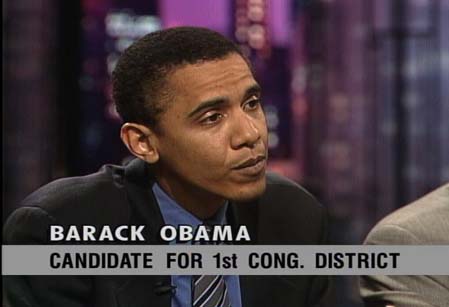
10 years ago our President was a candidate for the state senate. And a few dozen Illinois bikers could have changed the course of history. Now millions of people write Obama, and it has no effect on his decisions.

The only motorcycle statistic that matters is a legislative majority. Politicians know this. Average people understand it easily enough. It's not just about numbers, (which is problematic for a minority). It has to do with the few who have great influence over legislation. In otherwords, our legislators. Win them over, and nothing can stand in our way.

Ask a legislator how much influence a letter to the editor has on his beliefs. Some may read an article they already agree with, and others would just as easily dismiss it out of hand. But deep inside they've already figured out what matters to them, and the rest they can ignore.

Now turn it up a notch, and write letters directly to legislators. Make an appointment to visit them at the Capitol. Hold a protest rally on the Capitol steps, with news cameras rolling, staging spectacular displays of patriotism, and giving impassioned speeches to the masses.

When it's over, the legislators go back to the business at hand, and motorcyclists go back home. In a couple of days, it's as if bikers were never there at all. The legislators that support us will continue to support us, and the ones that oppose us will continue to oppose us. In the end, nothing really changed.

But what if the bikers approached legislators while they were still hungry candidates? Helping them win on the campaign trail is something they will always remember. And if they know that bikers will always be there to help in time of need, they will be eager to pay us back with their loyalty during the legislative session.

Back when my activism consisted entirely of writing impassioned letters, organizing newsworthy events, and tracking down legislators who were in the middle of a session, I was at best an unknown passer-by ... almost a trespassing nuisance in the halls of power. All my friends, like me, were outside looking in. And unable to change a single mind.

Then I started asking candidates about their helmet law position, well before the elections. Many of them staunchly supported the helmet law, while quite a few supported repeal of some parts. Others were on the fence, or had no opinion at all.

So I started working as a campaign volunteer for candidates who supported our right to decide. As it turns out, they also typically favored limited government intervention in people's day-to-day lives. That includes not only motorcycle issues, but other matters related to individual liberty.

As long as they were competitive, with a reasonable chance of winning, I gave them my best effort. Motorcycle issues were off the table, with every word and deed geared towards getting them elected. They saw this day-in and day-out on the campaign trail.

Now I have a personal relationship with four freshmen legislators. They know me by name, and they call me when they need help. They see me suppoorting them at events. They also ask me what I think about pending legislation. Only then to I tell them what I really think. And why do they listen to me above the media clamor? Because they know me and trust me. Anonymous letters and newspaper polls aren't more than a passing though.

If you were to ask any one them what has the most influence over how bills get voted on, letters to the editor would not be on their list. Constituent contact may take it up a notch, but only just so far depending upon the pros and cons of the political landscape.

But if you asked them how much of an impact campaign volunteering has, it would be at the very top of their list. Without a solid team of volunteers on the campaing trail, they'd be nowhere. And should those volunteers be working against them, it would give them a good reason to reassess their positon on a pending bill. No doubt about it.

So when a biker activist decides what course of action he should take, it would be wise to follow the path that has the greatest influence, and therefore gets the greatest results.

Most biker activists don't know this, as evidenced by how they prioritize the traditional political activities they employ. It takes an open mind to see things differently. But once viable alternatives are compared to the standard approaches, the true value stands out in stark relief.

Not every biker will understand the power of campaign work. Some will give it passing acceptance as long as it doesn't change the way they do business. But the rare biker will fully embrace this unconventional wisdom, and act upon it with great success. And when that happens, others will shed their old ways and embrace the new.

That's the day we stop fighting, and we start winning.

-RIDE2REPEAL@gmail.com

Tuesday, January 18, 2011

For Better or for Worse

Motorcyclists have been trying to restore their rights for decades. In a few cases they've made major strides. They were the lucky ones. Most often they have only had limited success.

How many times have they made the trip to the capitol? Sent out urgent calls to action when yet another bill comes crashing down on their freedom? And then walked away empty-handed, or put on a happy face by saying a bill could have been a lot worse.

The problem is that bikers rights activists are getting really good ... at doing what doesn't work.

Imagine it's your wedding night, and you're looking forward to an incredible night with your bride. For better or for worse, you two are stuck with each other ... for the long haul. That's a heck of a time to find out that she's really a dude.

Sure, you'd complain. You expected a beautiful woman, and explain that she's supposed to be, shall we say ... "complementary." Of course it makes perfect sense for her to be a woman. But all the pleading in the world won't change her outie into an innie.

But you don't have to be the "stuckee."

Instead of waiting until it was too late to do anything about it, you should have checked under the hood. Or at least noticed that she seemed to always wear turtleneck sweaters. Or that her shoes were the same size as yours.

Now she still wants you, of course. Just not the way you'd hoped.

Politics is the same way, with courtship taking place during the campaign season. The first step is to ask candidates where they stand on the helmet law. Their answer will probably encompass where they stand on personal freedom vs. public safety. Innie or outie.

The next step is find out if they have a reasonable chance of winning. Check with your SMRO since it's their job to know. Even if they don't, the Internet is a treasure trove of information about a candidate's chances. Newspaper articles, campaign finance reports, and political blogs are full of tips.

It would be a total waste of time to invest your time and energy with a sure loser. And you'd probably miss an opportunity to help a nearby candidate who is worth the effort. They have to be electable.

Finally, bust your tail to help them win. Make sure they know your top priority is sending them to the capitol. And then, after the election, you will be on a first name basis with one or more biker-friendly legislators.

This doesn't happen overnight. Old habits die hard. It's easier to react to bad bills than it is to build relationships ahead of time.

Just remember:
For better or for worse, you are stuck with the results.

-RIDE2REPEAL@gmail.com

Thursday, January 13, 2011

Action vs. Reaction

Delegate Chris Stolle (Virginia Beach) is patroning HB1850, a bill that will basically prohibit little kids from riding as passengers on motorcycles. And now there's a call to action that's circulating among biker activists around the country, asking them to write Delegate Stolle and express opposition to this bill.

From the sound of it, Delegate Stolle has heard all the arguments, and he still firmly supports the bill.

There's a history lesson to be learned here: Delegate Stolle won his first primary election in 2007 by only 170 votes. If a few bikers had been involved at THAT stage of the election, we wouldn't need thousands of letters now ... because Delegate Stolle would know us, and he'd have a reason to respect us.

It is up to us to develop a winning strategy that we can count on. The key to successful action is to act when it has the most impact ... instead of only reacting when the odds are already stacked against us. A little foresight now will go a long way. And it sure beats a truckload of letters (from total strangers) after a crappy bill has already been submitted.

The next primary season begins in about 4 months. But a force of reliable campaign volunteers doesn't happen by itself overnight. Those of us with campaign experience need to step up, by teaching others and by organizing local efforts. And the sooner we start, the better our results will be.

Political power is the key to winning fights like this. And political power comes from making a difference on the campaign trail.

-RIDE2REPEAL@gmail.com

Tuesday, January 4, 2011

Helmet Law Trivia

I was just taking a look at a timeline of when states either enacted or repealed a mandatory motorcycle helmet law. Here are ten trivia questions that will test your knowledge:

NOTE: "Repeal" means any change to the helmet law that allows adults to choose.

1. Which state had a helmet law for the least amount of time?
ANSWER: Michigan (67-68) & Iowa (75-76)
2. Which state has never had a helmet law?
ANSWER: Every state has had a helmet law.
3. Which state was the last one to first enact a helmet law?
ANSWER: California (1992)
4. Which state was the most recent one to enact a helmet law?
ANSWER: Louisiana (2004)
5. Which state was the first one to repeal a helmet law?
ANSWER: Michigan (1968)
6. Which year had the most states enact a helmet law?
ANSWER: 1967 (25)
7. Which year had the most states repeal a helmet law?
ANSWER: 1977 (15)
8. Which state has passed and repealed a helmet law the most times?
ANSWER: Louisiana (3 & 2)
9. Which state was the the most recent one to repeal a helmet law?
ANSWER: Pennsylvania (03)
10. Which states have had a helmet law for the longest time?
ANSWER: AL, MA, MO, NY, & TN (67-present).
BONUS QUESTION:
Which state will be the next one to repeal a helmet law?
ANSWER: That's entirely up to you.
Feel free to post your answers below. Or if you prefer, email your answers to RIDE2REPEAL@gmail.com and I'll post them for you.

Sunday, January 2, 2011

New Year, New Plan

In many states with mandatory helmet laws, bikers will once again pin their hopes on a bill to repeal some part of the mandatory helmet law. It's an annual rite of passage that usually starts with a debate about what kind of bill to submit, and usually ends with a disappointing defeat.

Then comes the second-guessing about why the bill failed. Most fingers will be pointed at the language of the bill. Or more specifically, what conditions should have been either added in or left out. As if the fate of the bill hangs on word-smithing.

This kind of talk entirely skips past the real reason.

Helmet laws are decided on Election Day. If biker-friendly candidates win, there are more legislators to vote for repeal. The only way to affect this balance is through campaign work.

If enough bikers work for electable candidates, repeal is a done deal.

But what if there won't be enough votes to pass a repeal bill? Should bikers give up without trying? Isn't it more sensible to throw in the towel before the inevitable knockout punch comes?

Absolutely NOT.

There is another reason for submitting a repeal bill, and that is to establish a voting record. When legislators show their true colors on such a basic freedom, they help us figure out who's with us and who's against us.

That will come in handy during the next election. It's one thing for candidates to SAY how they'll vote, but they can't hide how they actually DID vote.

So if your SMRO is submitting a bill to repeal any portion of the helmet law, encourage them to push that bill as far as it will go. Get the committee to vote on it. Get the full chamber to vote on it. Get both houses to vote on it.

The more votes are cast, the more we'll be prepared for the coming elections.

-RIDE2REPEAL@gmail.com